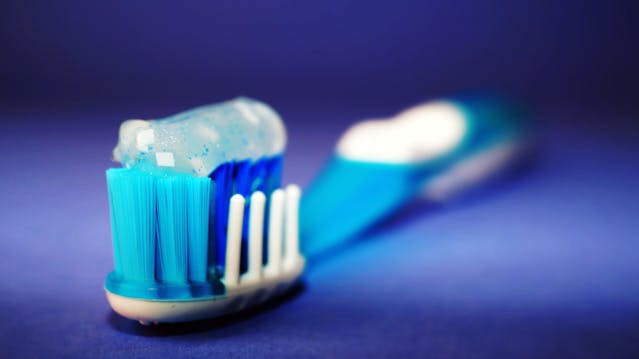
Fluoride is commonly used in standard toothpastes. It’s a great substance to clean and polish teeth, and fight against cavities. Topical application of fluoride is typically what is recommended for children. There are several different ways you can apply fluoride topically.
Toothpaste
As we mentioned earlier, fluoride is used in most toothpastes, and this type of toothpaste should be used until adult permanent teeth are fully in. A pea-sized amount of toothpaste should be given to children above the age of three, and they must brush at least in the morning and the night. Make sure that your child knows to spit after brushing, and there should be limited water for rinsing after brushing so that all of the fluoride doesn’t get stripped from the teeth. They should also not ingest this toothpaste.
Rinses
Rinses can also be an extra supplement that will help prevent cavities. However, these are only recommended for high-risk children above the age of six. They must be able to rinse and spit without supervision by the parents. We also recommend avoiding rinses that contain alcohol in them. Mouthwashes, supplements, and gels can also be used. Consult your pediatric dentist before adding a rinse to your routine.
Varnish
Varnish is a fluoride supplement that is applied by a dental professional topically. This is the most useful supplement for reducing cavities, and it is recommended that varnish should be applied every three to six months after teeth start coming in. However, this can change based on how many cavities your child is prone to getting.
Fluoride is a great supplement, but make sure that you aren’t overdoing it, as too much fluoride can cause fluorosis, white lines and streaks on the teeth.
Though we frequently use a standard fluoride toothpaste to cleanse our teeth daily, there are alternative substances that are helpful and beneficial for our dental care. One of these substances is called hydroxyapatite, a mineral that both strengthens and whitens teeth.
So, what is this mineral exactly?
Hydroxyapatite is a calcium phosphate that actually is already in human teeth and bones. The purest form of this substance is white, and that’s why our teeth, when they are healthy, are white. Lab-made hydroxyapatite is just as effective as natural hydroxyapatite in our bodies.
To add to the effectiveness of the mineral, it is the “most stable form of calcium phosphate,” so it won’t decompose through processes like oxidation. This makes it beneficial for various medical issues.
What can we use this mineral for?
Dental Health: Like we mentioned before, hydroxyapatite is a better alternative than fluoride for your dental health. When this mineral is added to toothpaste, it fills up the holes in the enamel.
Surgery: This mineral can also be used in bone and tooth surgery by coating implants. It can also help bones regrow and be repaired.
Environment: When used in air filters, hydroxyapatite can help absorb and decompose carbon monoxide, a dangerous substance. It can help also absorb fluoride.
What are the benefits of hydroxyapatite?
It is a non-toxic mineral, while fluoride can inflict harm. Hydroxyapatite also does not cause any inflammation.
Bone can grow on the surface of this mineral, meaning that the hard tissue in the body can be repaired by hydroxyapatite.
Hydroxyapatite is anti-microbial, meaning that it can fight bacteria in your mouth.
It is biocompatible and bioactive, so it can help your bones and teeth grow, and is identical to what substances are already in our bones and teeth.